Your cart is currently empty!
The burden of having to be amazing
I have a big burden – I have to be amazing.
This sucks, because I am not amazing. Certainly not most of the time. Who the f**** is?
I grew up as a gifted child – diagnosed at 6 – in a narcissistic family. Imagine that.
I don’t think it was very different for my older siblings, but I was told in no uncertain terms that my grades had to be the best possible grades (between 9 and 10).
I remember (now) being upset about this, smart enough to realise that this was some kind of unfair bind – “what if all parents required all children the same” I asked, aware there was some issue in the logic of my dad.
In hindsight, there was no logic, just a thirst for narcissistic supply, encouraged by my psychological assessment. This was, after all, proof that I was indeed smarter than most people.
This “having to be amazing” is a part of me that has evolved, yet survived, and I have become aware how destructive it has become.
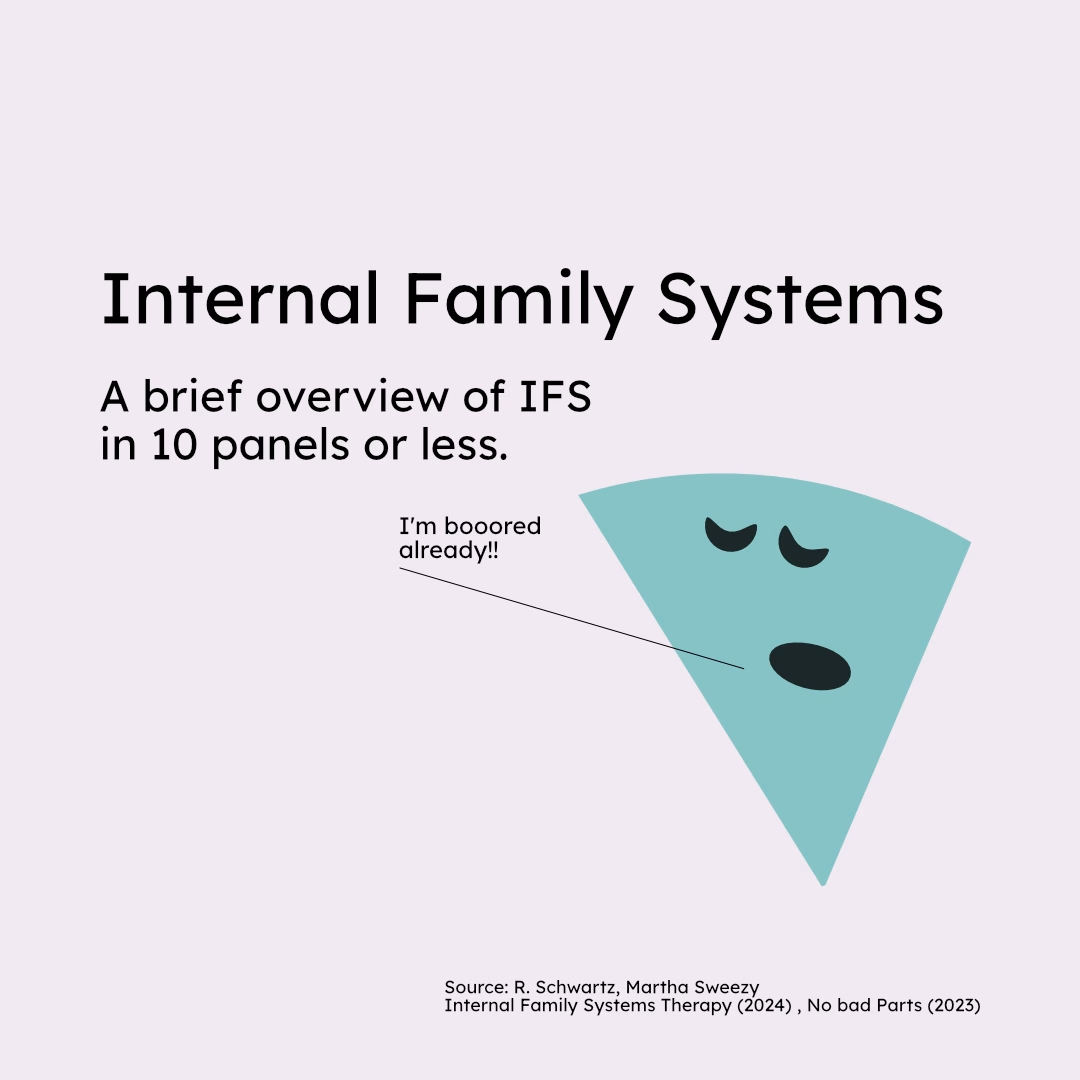
Using IFS to understand this dynamic
Through the lens of Internal Family Systems (IFS), this is an exile part of me that is upset, scared and crushed. It has burdened various firefighters and manager parts.
The firefighters are in charge of distraction and attention regulation. When I didn’t excel at something, they would distract me, bore me, tell me I could never do whatever I couldn’t do straight away.
Anything where mistakes were obvious: music, maths, football. I should avoid those things and claim “hey, I am not good at those things” so I could focus on the things I was naturally great at.
The managers then kicked in: they worked hard to excel at my core disciplines and managed me out of activities where I wouldn’t be a top performer. I didn’t touch an instrument since I tried a few times at 6. I quit maths as soon as that was an option. I developed a life rule to always choose the easy route, the natural route.
I am now 40+ and it has taken me all this time to spot this triangulating pattern between exile feelings, firefighter distractions and managerial pressure to excel. And now I need to heal this.
Spotting the exile feelings
Yesterday, I didn’t have a good practice session in my Level-2 course – at least I think that, because it wasn’t excellent. I was helping someone on a 4th 15min session and it had gone brilliantly the first 3 sessions, so I walked in with confidence.
At some point, I felt we were stalling. I wasn’t sure where to go and didn’t feel the person in front of me was developing insight either. The eyes of my two observers became penetrating. A voice inside of me quickly and quietly went “hey, do you really want to be doing this psychotherapy thing, seems quite boring” and pulled my attention away, took away the momentum I have built over the months, drew a blank.
The feedback wasn’t all that bad, I had a lot of positive comments. But I was also told that I was challenging and I had a more closed body language. I recognise in hindsight that firefighter activity was at play (“so what if I want to close my leg”) and my manager part was trying to take control (“let’s figure this shit out and stop the person-centred pantomime”)
I am grateful for this self-awareness. This morning, I did some inner world work with these parts, trying to unburden the exile part of these ridiculous, stupid standards.
This little boy is literally six years old, not much older than my own daughter and is upset, scared, stressed. The firefighters and the managers are also worried and have a lot of stories they want me to hear about from the last 3 decades.
We had a good hug and a little cry.
I have a lot of work to do to show them that we can survive not being amazing. But I also recognise the progress we have made.
For one, we are now aware of this dynamic and how pervasive it is.
We have also become more self-led by being more quiet, doing things as expected (as opposed to the brilliant, original way nobody thought about), being realistic about the practice it takes to develop mastery and just enjoying not being the centre of attention.