Ego states are ways of being that emerge within us in different situations.
As a concept, they are very much “the heart of transactional analysis” (Sills, Hargaden, 2003), a therapeutic modality that effectively combines psychoanalysis, humanistic philosophy and pragmatism.
Ego states can be understood in many ways, and these all can be helpful:
- Psychological realities (Berne, 1964)
- Creative adjustments to situations (Stewart, 2007)
- Organised system of behaviour and experience (Watkins and Watkins, 1997)
- Replays of earlier scripts, seeking familiarity (Sills, Hargaden, 2003)
- Ways to define our self and provide identity (ibid)
- Defenders of difficult unconscious material (ibid)
Ego estates are therefore functional: they serve a purpose. Maybe a self-limiting dysfunctional one, but a purpose nonetheless.
Ego states can be used to understand how we relate to other people and how that in turn elicits a certain dynamic.
This interpsychic, interrelational aspect will be the focus of this article. For a perspective on ego states as acting within us (intrapsychic), check my other article on ego estates.
Before I get into it, I want to reflect that the literature on ego states is well diverse and there are different philosophical positions one can take. I want to name a few key ideas that I find helpful when working with ego estates and T.A as a whole:
- That humans are OK and ego estates are creative adjustments, which
- Limit us sometimes in unhelpful ways, and that whilst
- Adult is the estate we want to inhabit the most,
- There are positive traits in all the estates, provided
- We remain situationally flexible in how we tap into these, develop our self-awareness of how we respond, and avoid playing games.
Types of ego estates: Parent, Adult and Child
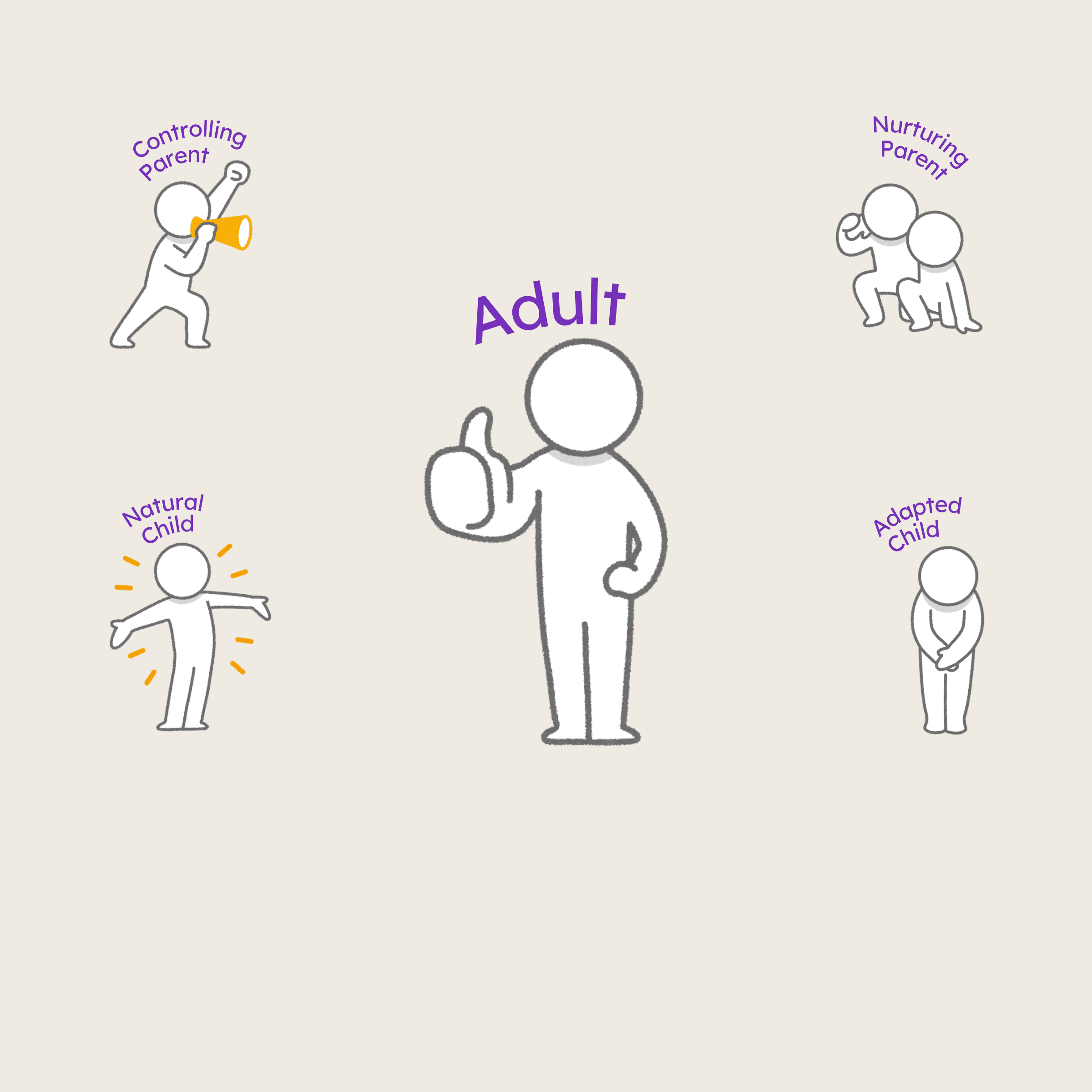
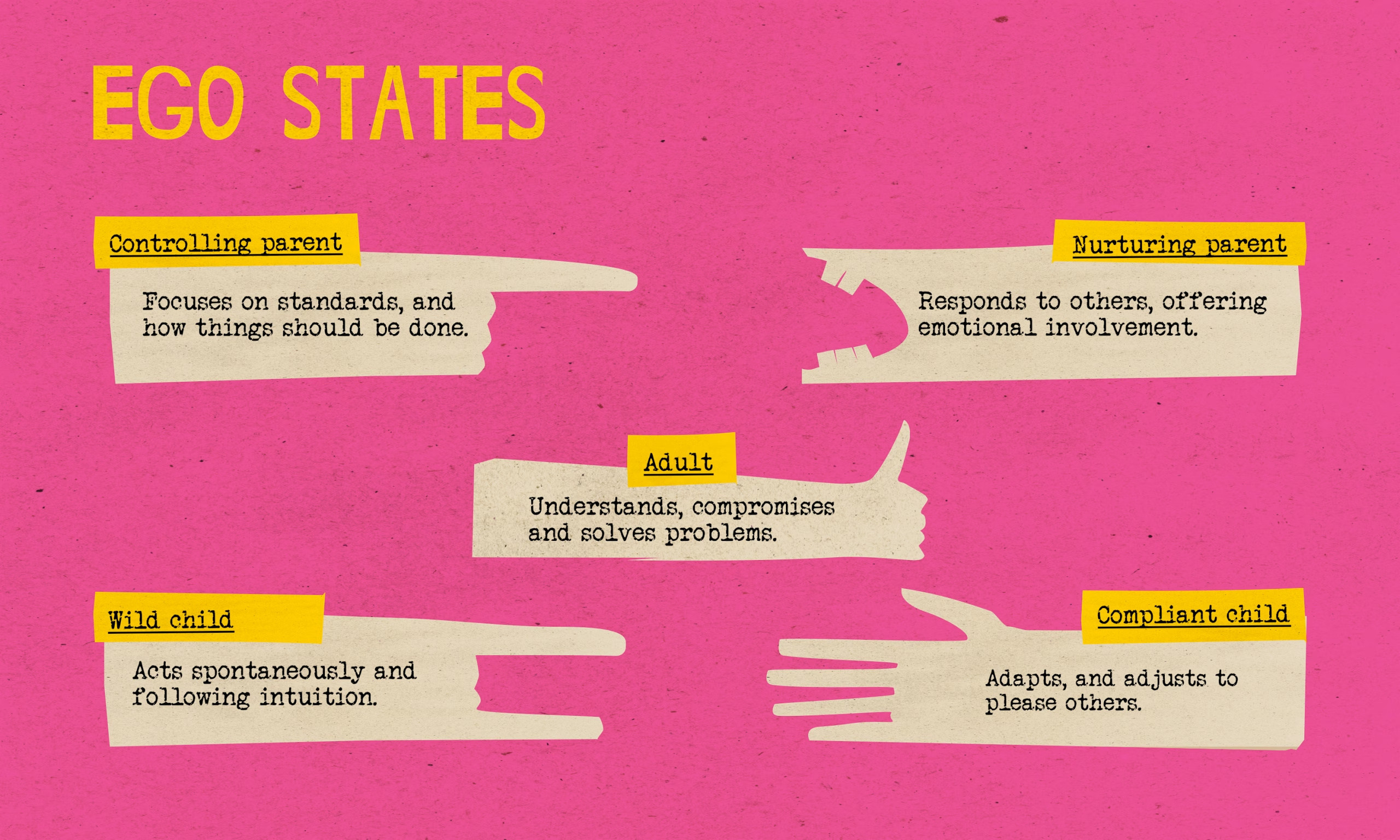
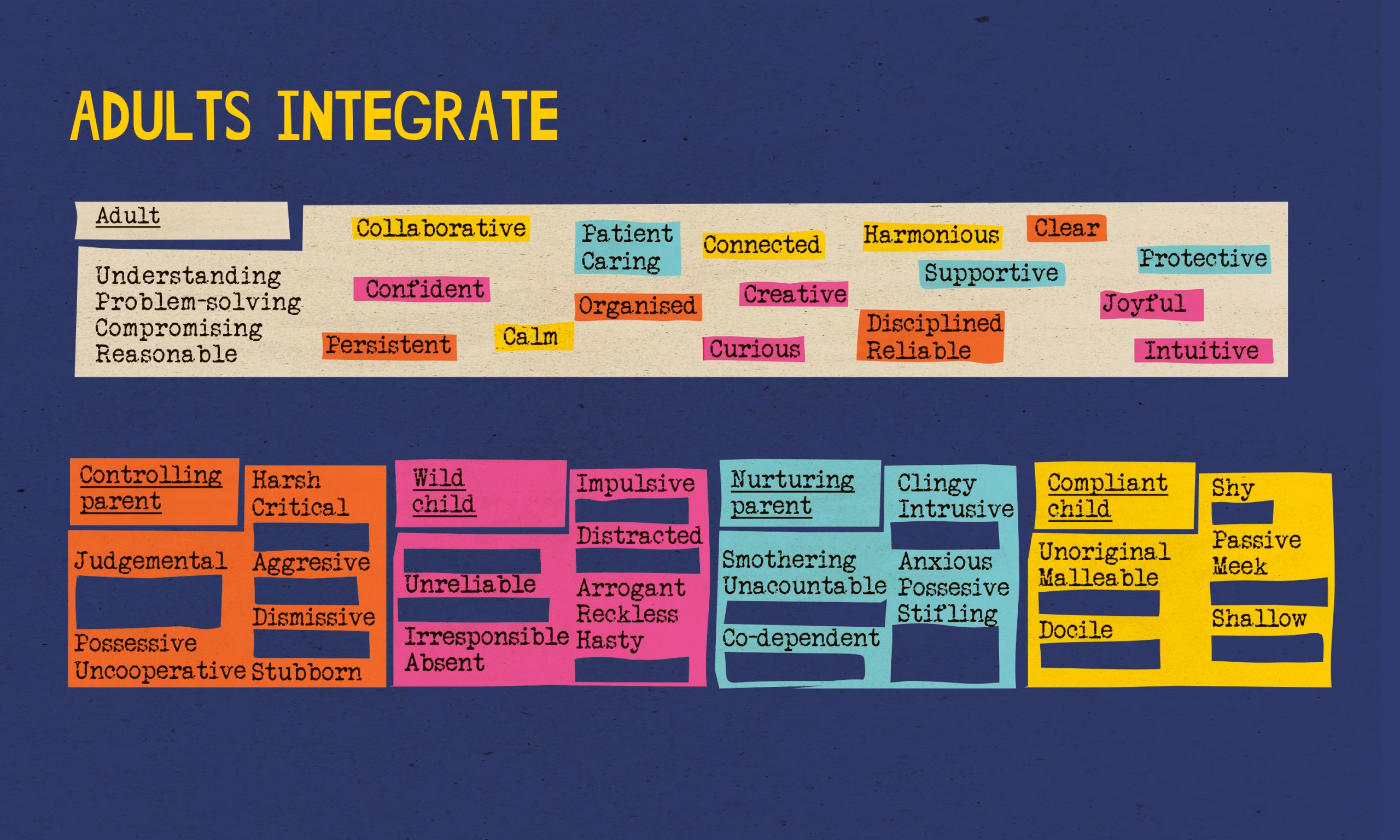
There are three main ego states (parent, child, adult) and by further subdividing the first two we have a total of five: controlling parent, nurturing parent, adult, wild child and adapted child.
Parent ego estates
The parental ego states are inherited from others, the result of the socialising force that was exerted on us as children – not only by our caregivers and other relatives, but also by societal figures such as teachers and neighbours as well as wider cultural norms. They are the shoulds and oughts. They lead to us displaying the feelings, attitudes, beliefs, vocabulary and/or posture that we learnt from those figures.
As we grow up, the main function of these estates for our relationships – when in healthy display – is to protect and support other people. They are naturally very helpful for raising children or to support people at times of genuine need. However – when dysfunctional – they can be disempowering, patronising, dramatic and hurtful to those around us.
The Parent is further divided into:
Controlling parent: critical, judgemental and controlling. Dominated by fear, the controlling parent is the harsh voice of ourselves and others. Associated with masculine energy and with achievement and discipline.
The controlling parent is mostly seen as negative (also known as critical parent), however there are limited occasions when it can be helpful in small doses: achieving important objectives, parenting, protecting defenceless victims.
Nurturing parent: caring, supportive and protective. This parent “just wants to help others”. In the right dose, the nurturing parent is very positive, unless it errs towards “rescuing”, self-effacing, clinginess and lack of accountability and contribution.
Child ego estates
These ego states were fixated in early childhood; they are “relics from the past” (Berne, 1964) that again can carry helpful or unhelpful ways of being.
The Child is further divided into:
Natural Child: creative, intuitive and curious. This is our “original estate”, which we lose touch with as we adapt to societal and parental demands. Children who have experienced adverse conditions growing up may have completely lost touch with this child, or conversely, remain stuck in it.
Adapted Child: obedient, pseudo-rebellious and structure-seeking. This is the child that has understood that parents and society put conditions of worth onto us to be accepted.
Adult ego estate
Adult is the ideal ego state – where we use our best judgement, problem solving and understanding to get in touch with our emotions and look after our needs.
In this ego state, we assess reality with objectivity and are capable of making the best decisions based on an appraisal of the situation. It’s easy to interpret (and some people do) that the Adult is emotionless, however as Berne indicates it also plays the role of “regulating the activities of Parent and Child and mediating between them” (1964). Therefore, in integrating effectively the positive characteristics of other estates, it can develop a rich and balanced emotional tapestry to suit the complexity of our social world.
Transactions
A transaction is “the unit of social intercourse”. Transactions are then organised in different types of interactions, including games, passtimes, activities or intimacy.
Briefly, these forms of social intercourse go from the most dangerous to the most fulfilling
- Games are exchanges with ulterior motives to fulfill someone’s needs (a pay-off) – check this article for a detailed map of games.
- Passtimes are semi-ritualised ways to structure time in social company like small talk
- Activities are more ritualised and oriented towards a goal: work, sport, etc
- Intimacy is the real relating that happens when scripts have been given up and ulterior goals discarded.
Paying attention to how transactions happen between ourselves and others is helpful to identify our estates and those of the other person. When we notice we are in an unsatisfactory interchange of transactions with someone else (such as arguments with loved ones) we can reflect on how we can approach things differently and realise the multitude of options we have (Karpman, 1971)
Transactions can be locked (complementary), duplex (or covert) and crossed.
The purpose of transactional analysis is to identify when locked or duplex transactions are unsatisfactory or limiting, and how to cross them.
Locked transactions
These transactions are also called complementary, although most often they have a negative impact on the people involved. This is because they complement and sustain each other by fixing people into prescribed roles for those ego estates.
Adult estates are always absent in locked transactions because adult estates naturally cross transactions.
Examples of locked transactions are:
- A controlling parent dominating an adapted child. This is very common and can happen in families (father/son and father/daughter most commonly), in organisational contexts (boss/employee), friendships (bully/sidekick) and in romantic relationships (abuser/abused partner).
- A nurturing parent rescuing a wild child. Common in families (mother/son and mother/daughter most commonly) and in romantic relationships.
- A controlling parent and a nurturing parent. They can enable each other as bad-cop and good-cop to their children. This is a common set up in narcissistic and other dysfunctional families.
- A wild child and an adapted child play the naughty and nice child roles and use themselves as anti-role models as well as vicarious ways of living. These can be seen in friendship pairs or siblings.
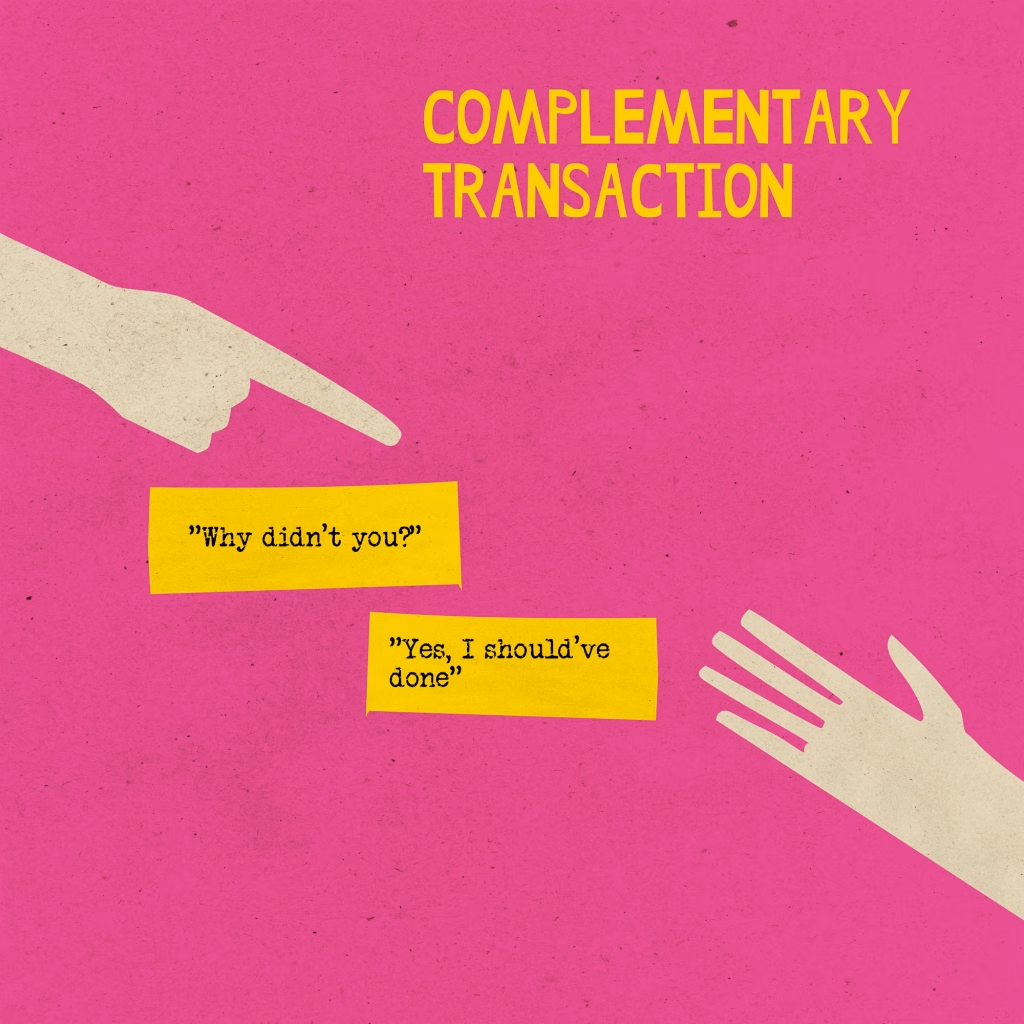
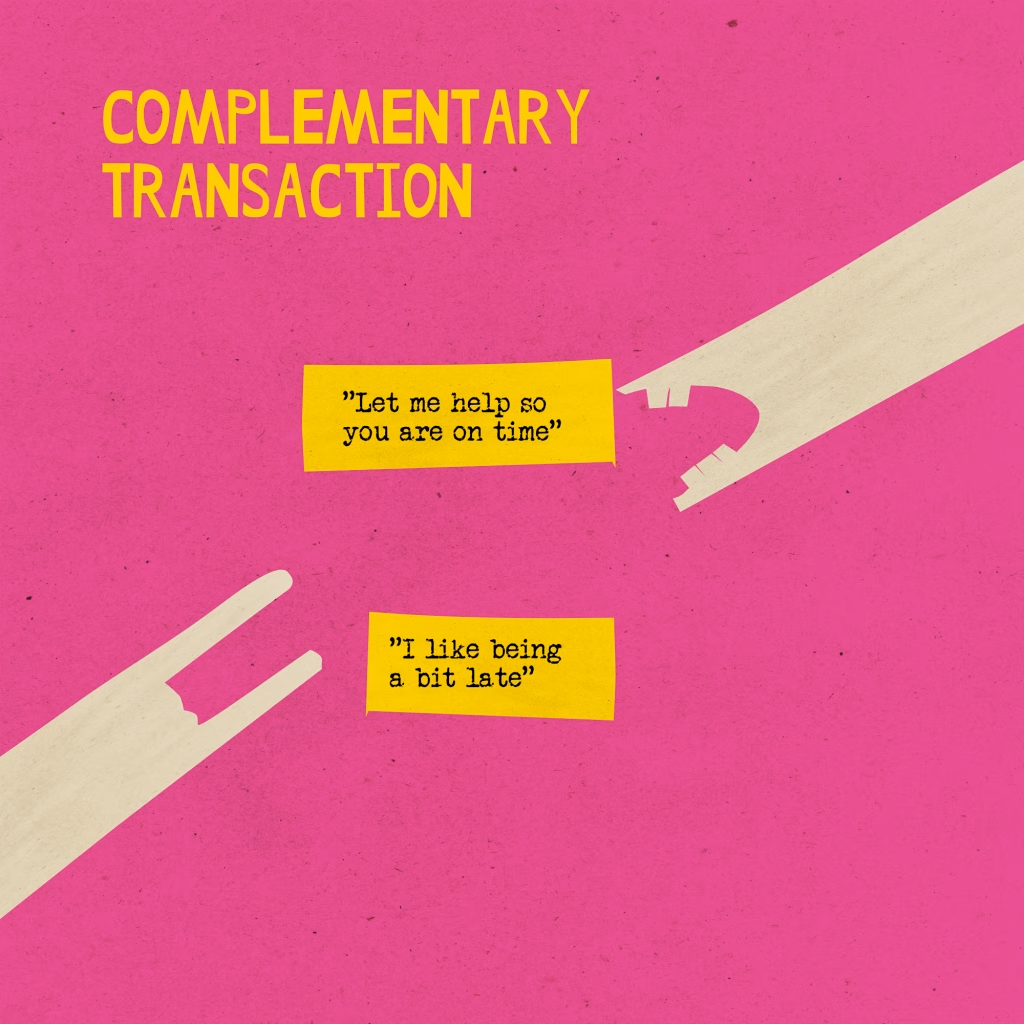
These transactions are the most common locked transactions because “they work”, they are complementary. Ego estates are compatible with each other and outwardly or apparently comfortable in that there is no immediate tension. Therefore, they can be maintained indefinitely.
Duplex transactions
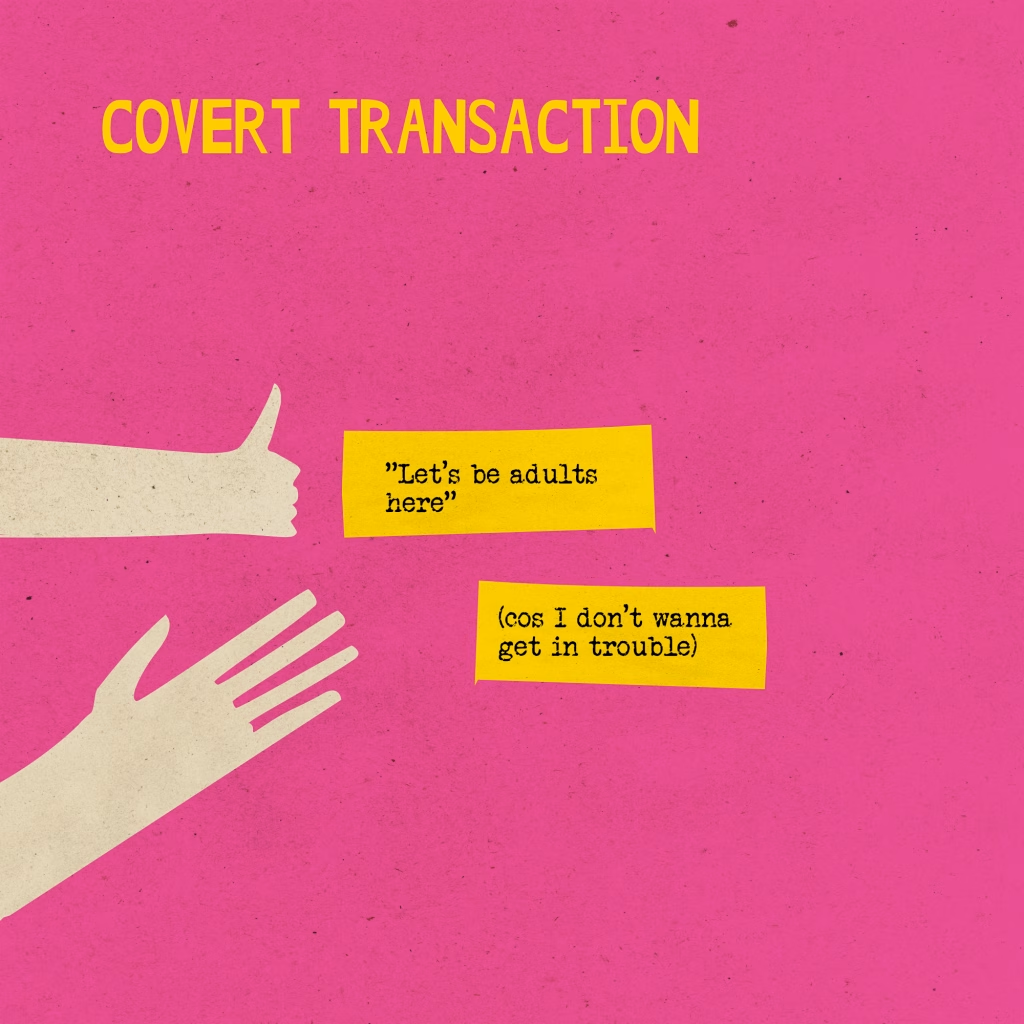
These are transactions in more complex interchanges and they are used to mask locked transactions by giving them an resemblance of adult-adult encounter or by packing two ego estates into one. In either case, the person is seeking influence and is making intimacy harder.
The below examples may give a sense of potential duplex or covert transactions. However, it’s key to understand the tone, body language and other signs to the intent of the person before making conclusions.
- “Tell me how you did this” (adult covering controlling parent)
- “That is not very kind” (nurturing parent covering controlling parent)
- “It’s important to follow the rules” (adult covering an adapted child)
- “It’s nice when we do things for each other” (nurturing parent covering adapted child)
Crossed transactions – and how to use them.
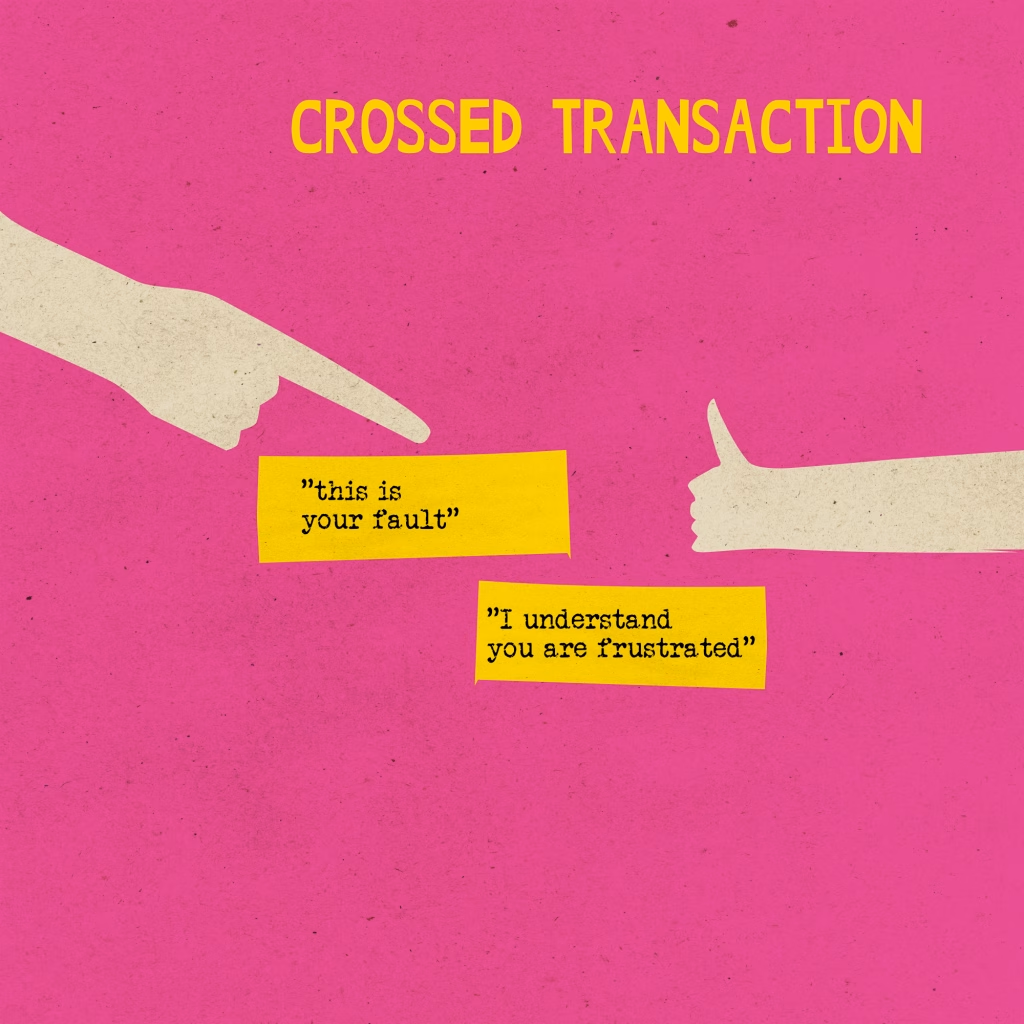
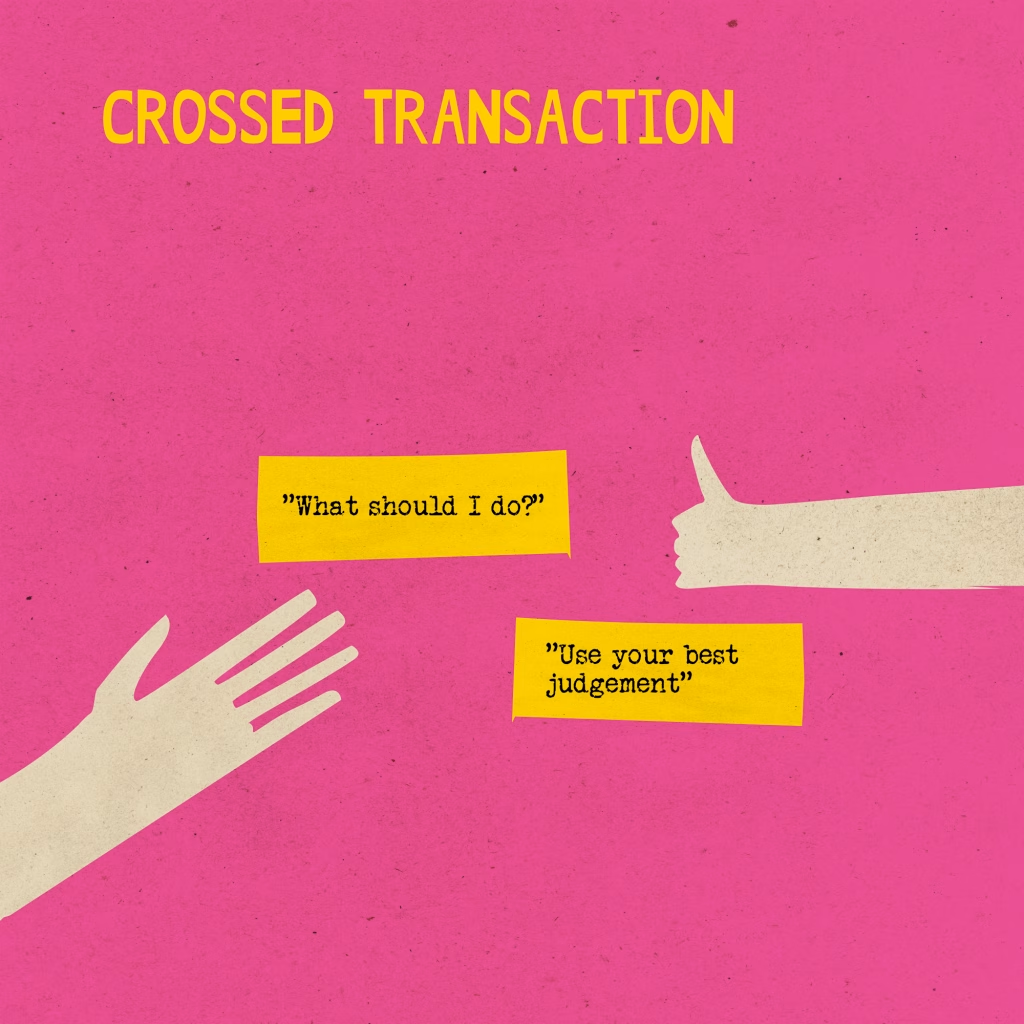
A crossed transaction is that which stops a locked transaction (or an ensuing game) to persist, freeing the person from an unhelpful dynamic.
Crossing transactions is hard because it creates conflict by not responding to the person the way they have recruited us and hoped we would. They are particularly difficult when locked transactions have been in place for a long time.
There is this common understanding that adult ego estates are the only ones that can cross transactions – and indeed they are the most straightforward and helpful to do so. However, it’s important to bring creativity and make use of all the available options to cross a transaction – this can be playfulness and humour, or aggression.
For example, say a partner in a controlling parent estate is seeking responses from an adapted child.
- “I don’t understand why you spend so much money on toys for our son.”
If their partner responds as an adapted child, the transactions will flow naturally but dysfunctionally, getting both stuck in these estates.
- “Yes, you are right, I won’t buy as much as ask my friends for hand-downs.”
However, using creativity, the partner can respond in many other ways. Some may be more or less helpful depending on the situation and the goal of the person responding:
- Adult: “Look, it’s important for our son to develop creatively and emotionally and I think I am spending the right amount. If you disagree, let’s sit down and look at the budget to discuss what may be the right amount for both of us”
- Wild child: “Chill. We have enough money. Have a drink with me”
- Controlling parent: “Maybe don’t go to the pub every Friday and we will be fine”
- Nurturing parent: “I know you get a bit nervous about money but we are doing super great, honey, take some pressure of yourself”
Conclusion
Ego estates are a helpful way of making sense of our interpersonal dynamics (as well as intrapsychic dynamics). Coupled with the analysis of transactions, they can help us improve our relationships, develop intimacy and free ourselves from toxic interactions.
If you want to know more about transactional analysis, check Eric Berne’s website or ITAA’s.
Bibliography
Berne, E. (1964). Games People Play: The Psychology of Human Relationships. New York: Grove Press.
Karpman, S. (1971). Options. Transactional Analysis Journal.
Sills, C. (2006). Ego States: A Therapeutic Model for Personality Integration. London: Sage Publications.
Stewart, I. (2007). Transactional Analysis Counselling in Action. London: Sage Publications