Gestalt is an existential-phenomenological model of therapy that places focus on human experience.
Boundaries are the different areas in which this experience happens, making it a key concept in Gestalt therapy.
In “The emergent self” Peter Philippson gives an overview of three different boundaries.
Using these concepts we can evaluate our experiencing at these three boundary levels, their interactions and experiment with ways to notice and adjust our boundaried selves.
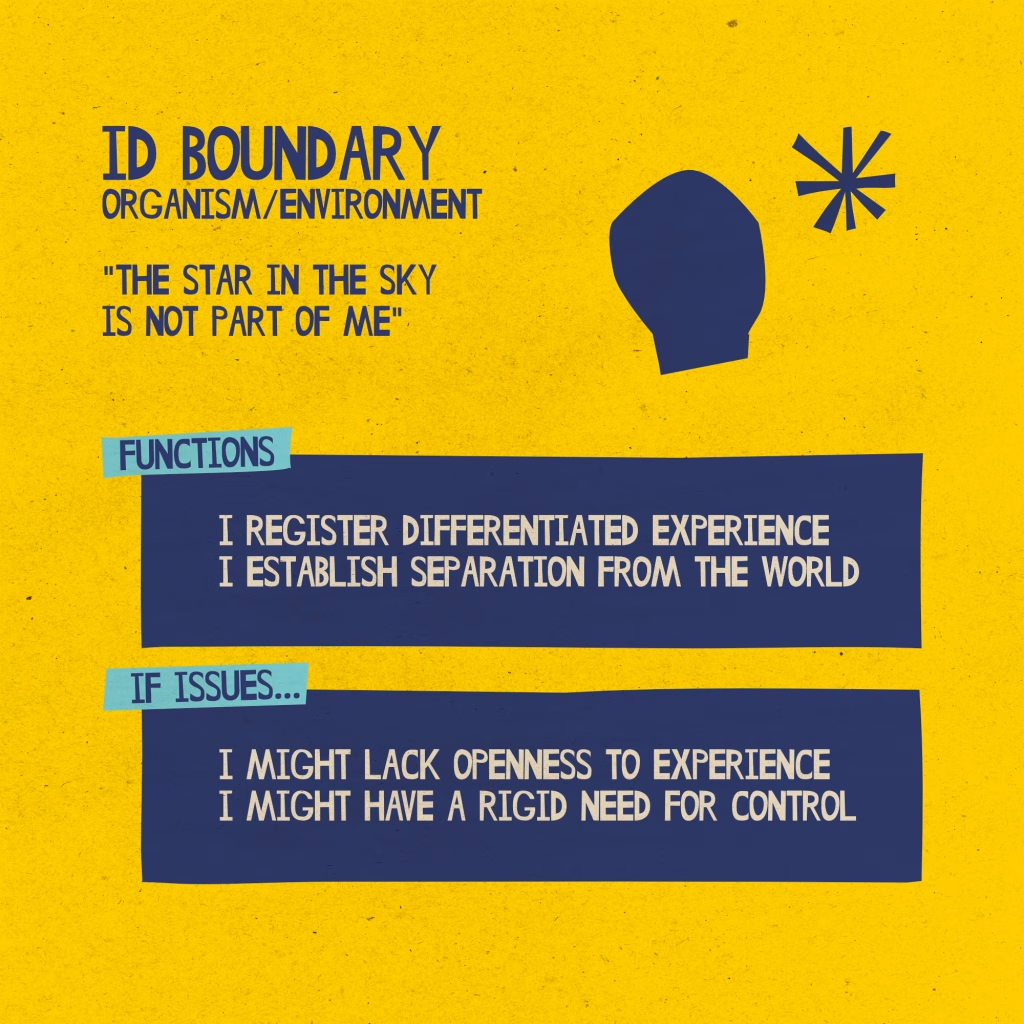
The Id boundary (organism/environment)
This boundary is the most fundamental. It simply separates our organism from the environment, allowing us to perceive and register our experience as an embodied self surrounded by things that aren’t us.
Its function is differentiated experience. It means we can safely perceive and ignore a police car’s siren, rather than thinking that the noise comes from our own organism.
If we have issues at this boundary level, we may not be relaxed and open to experience. We may be more “jumpy”, misinterpreting environmental cues and making assumptions and rushed decisions.
To strengthen this boundary, we can engage in embodiment practices such as breathing or mindfulness techniques (generally or in a given situation).
The ego boundary (self-others)
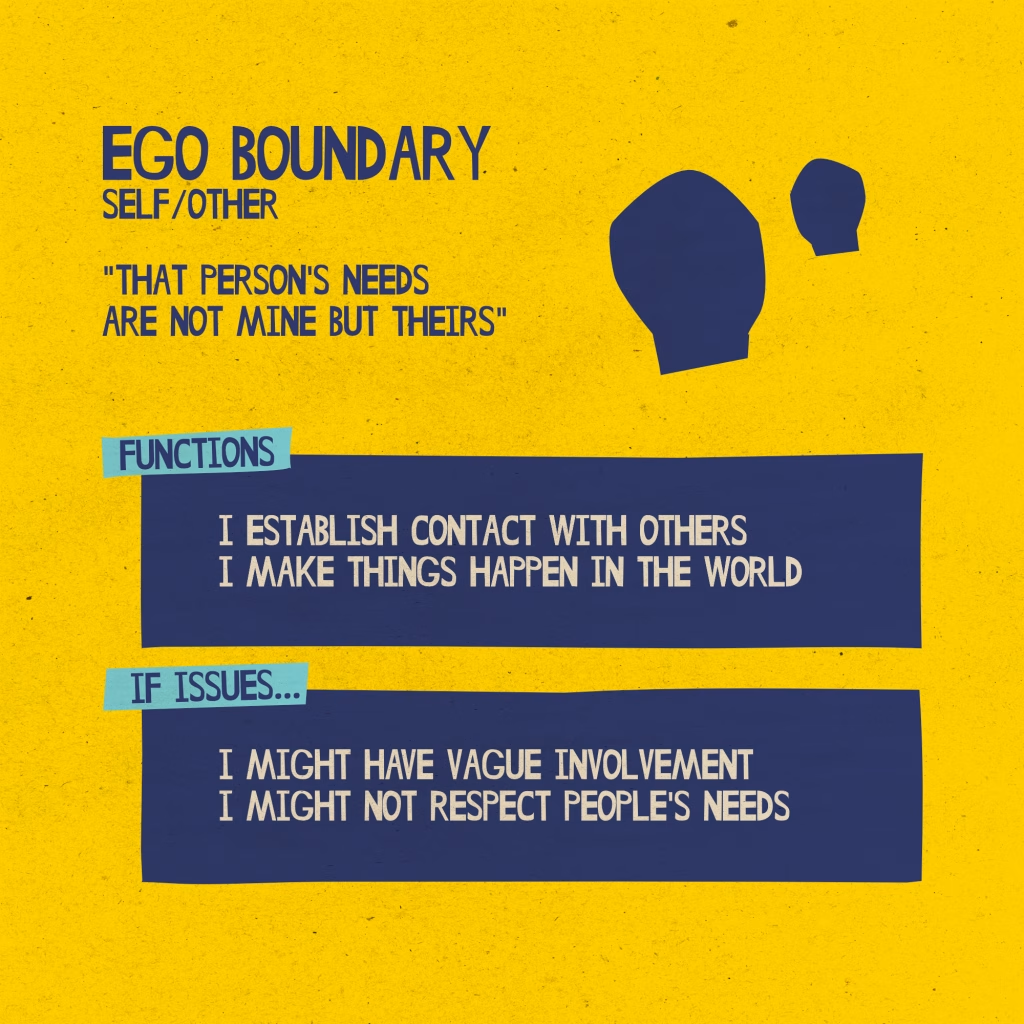
This boundary separates us (our-self) from the other.
Its function is contact. Contact is a key term in Gestalt that stands for interacting with the world outside of us. It’s about interacting with people, using tools and carrying out tasks to meet our needs.
There is also another function it plays and that is to help us perceive ourselves in the first place. It is only in the interaction with others that I get to know myself.
If we have issues with this boundary we may either be unengaged and vague, unsure of what we are meant to do in the world. Or, at the other extreme, we may be aggressive and domineering of others, unaware of where our needs start and end in relation to others.
Personality boundary (me-not me)
This boundary appears as a function of time. The previous two boundaries would remain useful even if we couldn’t compute a future beyond the present moment. But in order to function in the world as we know it, we also need a personality boundary.
Through the use of this boundary, humans can create a working, stable environment where our parents remain our parents, our jobs continue the next day and our partner remembers we like our coffee without milk.
Its function is autonomy and the creation of a self-object upon which I can ascribe values, build relationships, set goals and take on projects.
Personality boundaries are usefully limiting in that they delimit “who we are” so that we do the things that we need to do like parenting, working and paying taxes.
However, they can become fixed and rigid (“but I never have coffee with milk” or “this is just who I am”) which limit our experience, harm our relationships and create inner conflicts.

Healthier boundaries across all levels
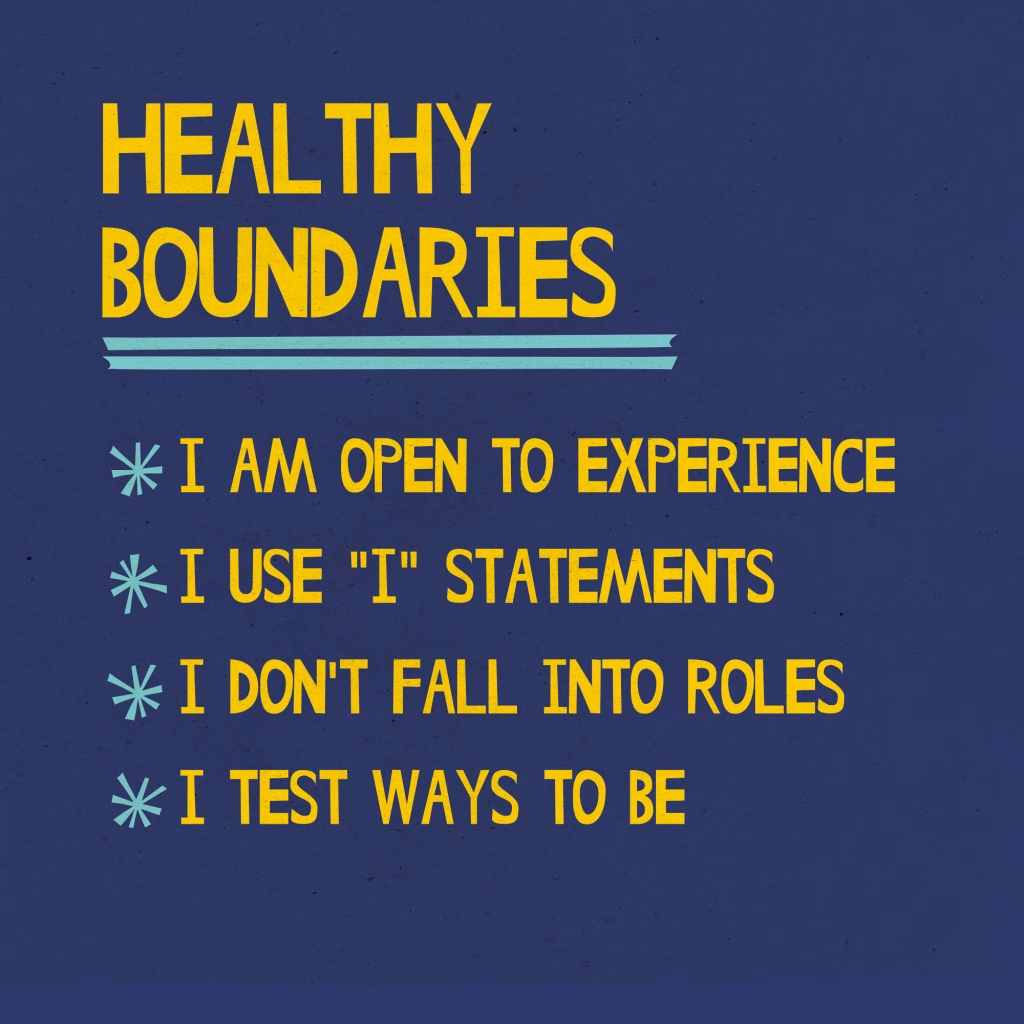
We can notice and enhance our boundaries so that they are “just right” for us.
Starting with the Id boundary, we want to make sure that we pay attention to the environment. If we are distracted, anxious or too “in our heads” we are likely to become overwhelmed with the environmental demands (losing our keys, leaving our passport behind or misunderstand instructions) and suffer accordingly.
We may also perceive hostility in environments because we can’t differentiate our own anger from the external world.
At the ego boundary level it’s all about healthy contact. Expressing our needs, listening to other people and assertively but amicably find ways of relating with others. If we find that “people are so difficult” (or selfish, or aggressive), we may have a clue that our ego boundary needs some consideration.
Something to watch out for is to “fall” into roles to fulfill other people’s needs. When someone has poor boundaries, they find ways to slot people into roles. If this is something that happened in our childhood, we are likely to easily fall for that and end up being “everyone’s carer” or “the good girl”.
As we move into the personality level the idea of experiments can become helpful. Choosing areas where we feel we have been stuck, we can try to experiment with different ways of being, as if trying them by size.
- Impatient people can try the slowest queue.
- Perfectionists can try a new hobby.
- Controlling people can try leaving someone in charge.
- People pleasers can try saying no.
That way our personality boundary becomes more flexible and able to adapt to a wider range of possibilities.
Bibliography
Philippson, P. (2009) The Emergent Self: An Existential-Gestalt Approach. London: Karnac Books.