The below article is based on Kate Murphy’s “You’re not listening” where she recounts Charles Derber analysis of responses in conversation. Thank you for a wonderful read!
Charles Derber is a Marxist sociologist who analysed conversations and noticed two main styles of response in an individual or group situation
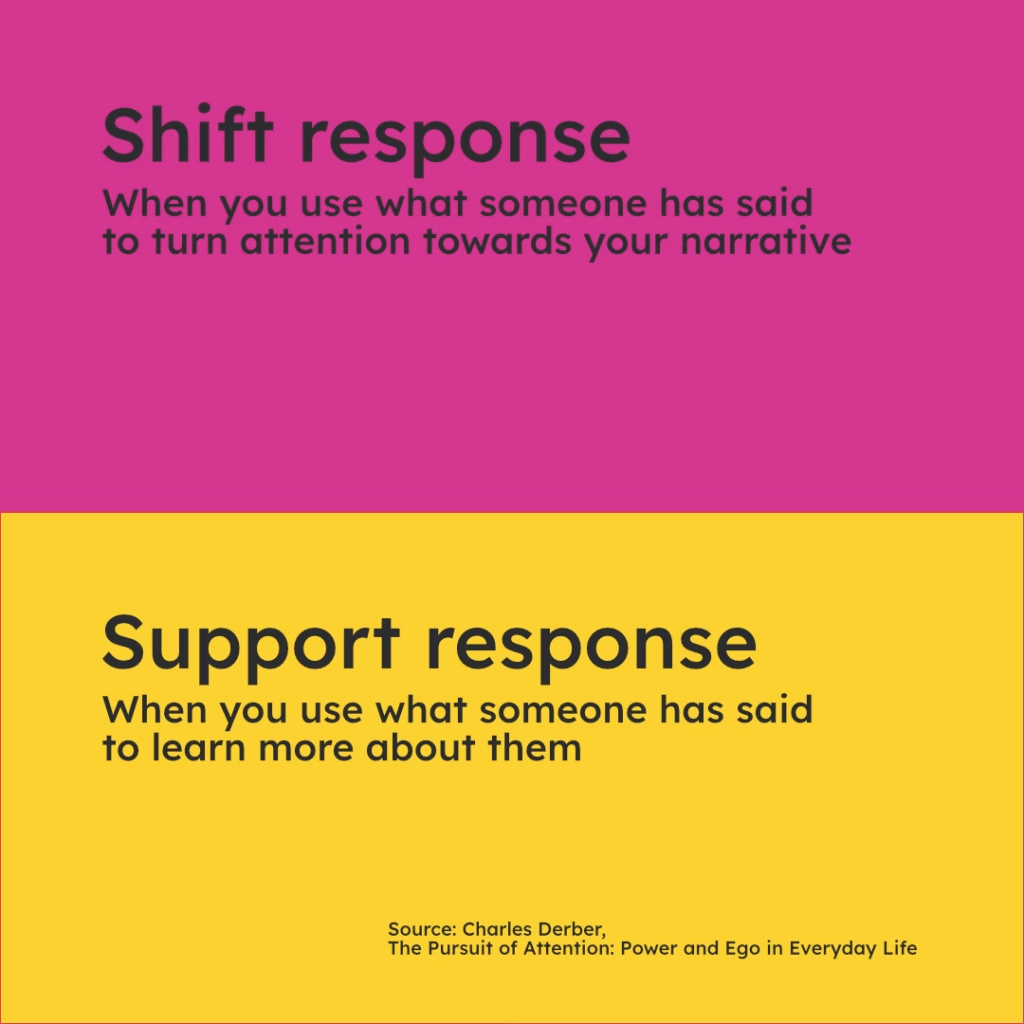
The shift response – not listening
Derber argues that as support systems in Western societies weaken, people often find themselves trying to turn attention towards them.
This is what he named “conversational narcissism” where a person in conversation may shift responses away from the speakers and towards them, as below
Pedro – I really want to buy a house and I can’t afford it.
Naomi – Me too. I think I have enough for a deposit, but I don’t think I can borrow enough money, unless maybe I ask for a payrise, which I have thought about, except my boss is not really in the best place right now. So yeah, I am struggling with this.
The shift response is common. Even natural. We often think that conversations are a give and take. We hear what people say and relate to it with our own stories. Nothing wrong with that. Or, is it?
The support response – listening
There may be nothing wrong with the support response, but there is an alternative: the support response.
The support response stays with the speaker and uses curiosity and active listening skills like silence and reflecting to help the person unpack their thoughts.
Pedro – I really want to buy a house and I can’t afford it.
Mary – ah really? what is your situation?
The give and take can still happen, with speakers in turn taking a support role to let others speak and unpack whatever they bring to the table.
Listening as present-giving
A visual metaphor: imagine someone coming with a gift for you, complete with wrapping and a bow.
A shift response would be to look at it, poke it with a pen, and reach out for your own bag to take out a similar sized package. Now there are two unwrapped presents on the table.
A support response looks at the parcels and invites the speaker to grab it, turn it, untie it, unwrap it, open the box, take things out of it and explore those things in turn.